
Full Aperture End: How Does a Full Opening Design Change the User Experience?
Oct 22, 2026
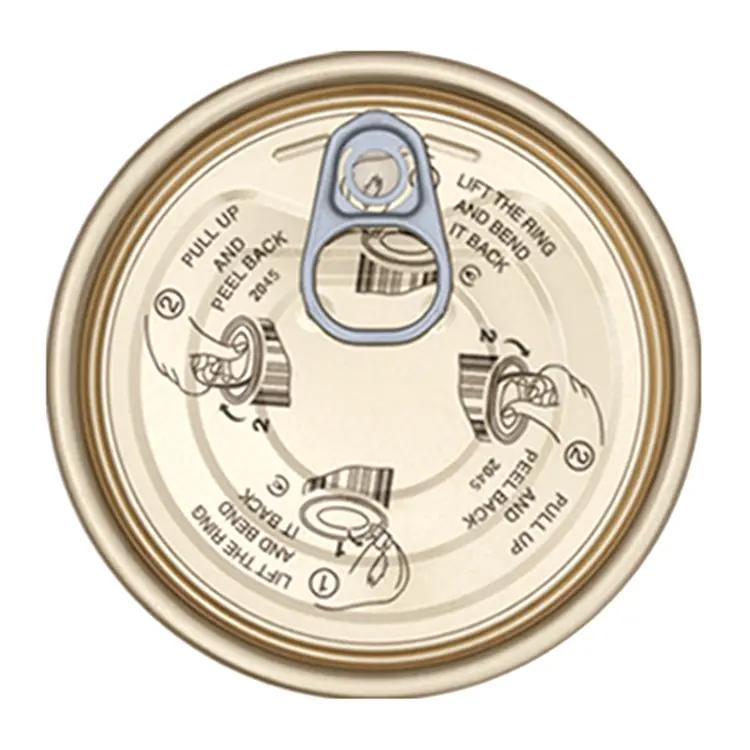
Yantai, Shandong Oct 22, 2026 (Issuewire.com) - The opening structure of a can affects how easily its contents can be accessed, poured, or removed. A Full Aperture End is designed to provide a much larger opening than many conventional easy-open ends, with the entire end panel removable in certain designs. This changes more than the appearance of the package: it can influence how consumers handle the container, interact with its contents, and use the product after opening. However, a larger opening is not automatically the best choice for every application. The benefits depend on the product's physical characteristics, the intended method of use, and the requirements of the complete package.
How Does a Full Aperture End Change Access to the Contents?
The main difference between a Full Aperture End and a conventional easy-open end is the amount of space available after opening. A smaller opening may work well when a product is consumed directly from the can or poured in controlled amounts. However, it can make it more difficult to remove solid pieces, scoop out ingredients, or see what remains inside the container.
A full-opening design exposes a larger portion of the can interior. This can make it easier to access solid or semi-solid contents without repeatedly tilting or shaking the container. Users may also find it easier to inspect the remaining contents and remove portions with a suitable utensil. For beverage applications, some full-aperture designs allow the can to function more like a drinking cup. The wider opening changes the drinking experience and can make the contents more visible. For food packaging, the same structural principle may simplify access to ingredients that are not conveniently dispensed through a narrow opening.
The practical difference therefore comes from how the package is used. A larger opening is valuable when it makes an intended action easier, rather than simply because it provides more exposed area.
Why Do Different Contents Require Different Opening Designs?
The shape, size, consistency, and dispensing method of the contents all influence whether a Full Aperture End is appropriate. Products that are removed individually or scooped out may benefit from a wider opening, while products intended for direct drinking or controlled pouring may have different requirements. For example, nuts and candies are often handled as individual pieces. A larger opening can make it easier to reach inside and take out a portion. Powdered products, such as coffee powder or milk powder, may also require convenient access for scooping, although protection from moisture and suitable storage remain important.
Canned vegetables, fruit, or other solid food products present another consideration: users may need to remove the contents rather than pour them out. A wider opening can simplify this task, depending on the can's shape and the texture of the food. For liquids, however, a larger opening may make pouring less controlled, so the intended dispensing method should be evaluated carefully.
When comparing opening designs, consider these factors:
- Content characteristics: Determine whether the product consists of liquid, powder, small pieces, or larger solid items, and how easily it can pass through a limited opening.
- Intended use: Establish whether consumers will drink, pour, scoop, or remove the contents directly from the container.
- Portion control: Consider whether a larger opening improves access or makes it harder to control the amount dispensed.
- After-opening handling: Assess whether the product is usually consumed immediately or whether the remaining contents may need to be stored.
These considerations provide a more useful basis for choosing an opening design than comparing opening sizes alone.
What Practical Limitations Should Be Considered?
Although a Full Aperture End can improve access, its larger opening also changes the package's condition after use. Once the end panel is removed, the contents may be more exposed to air, moisture, or external contaminants. The importance of this exposure depends on the product and its storage requirements.
For products intended to be consumed in one sitting, a large opening may be convenient. If the contents are likely to remain in the container, however, users may need to transfer them to a suitable storage container or follow the product's recommended storage instructions. Powdered foods and other moisture-sensitive contents require particular attention to storage after opening. Opening performance is another important consideration. The end must open as intended without creating unnecessary difficulty for the user. Factors such as the scored area, opening panel, pull-tab arrangement, and overall end construction affect how the opening process works. These features must be designed as part of a complete structure rather than treated as separate elements.
Package integrity before opening is equally important. The end must be compatible with the can body and the intended sealing process to help maintain the required closure. A full-opening design should therefore be evaluated not only for convenience but also for its compatibility with the packaging system and product requirements. Finally, the exposed opening edge and the way the container is handled after opening should be considered. The appropriate construction and handling guidance depend on the specific product design and applicable safety requirements. These details should be confirmed through product specifications and suitable evaluation rather than assumed from the term Full Aperture End alone.
How Can You Choose a Suitable Full Aperture End?
Selecting a Full Aperture End starts with understanding the actual task the package needs to perform. The objective is not necessarily to choose the largest opening, but to find a design that balances access, handling, sealing, and compatibility with the intended container.
First, identify how the contents will be accessed throughout normal use. If consumers need to remove solid pieces or scoop ingredients, a full opening may provide a clear advantage. If the product is mainly poured or consumed directly, compare whether a full opening offers meaningful benefits over a smaller or partial opening. Next, consider the can body and sealing requirements. The end diameter, connection with the can body, and intended packaging process must be compatible. A design that provides convenient access but does not match the required container structure is not a suitable solution. It is also useful to review the opening process and the expected handling conditions. Product specifications, drawings, and physical samples can help confirm the opening configuration, material, and intended application. Where necessary, testing the end with the actual package and contents can reveal practical issues that may not be obvious from a drawing.
A well-matched Full Aperture End should support the product's intended use while meeting the packaging system's structural and sealing requirements. Evaluating these factors together can reduce avoidable design changes and help ensure that convenience does not come at the expense of package performance.
Finding a Full Aperture End for Your Packaging Application
Different products require different combinations of opening access, can-body compatibility, and sealing performance. Packfine offers aluminum full-aperture easy-open ends for applications that include beverages, nuts, candy, coffee powder, milk powder, and seasonings, with product options varying by design and specification. Reviewing the available configurations alongside the intended contents, container structure, and opening requirements can help clarify which option is appropriate for a particular packaging project. For application-specific requirements, consulting the product details and discussing compatibility before finalizing the package can support a more informed selection.
Conclusion
A Full Aperture End can improve the user experience by making a larger portion of the can interior accessible. Depending on the application, this may simplify drinking, pouring, scooping, or removing solid contents. However, the most suitable design depends on the product's physical characteristics, handling method, storage needs, and compatibility with the can body and sealing process. By evaluating the complete packaging application rather than focusing on opening size alone, it becomes easier to determine whether a full-opening design provides a practical advantage.
FAQs
1. Is a Full Aperture End suitable for powdered products?
It can be suitable when convenient access for scooping is required. However, moisture protection and storage after opening should also be considered, especially for products that are sensitive to humidity.
2. What is the difference between a full aperture and a partial easy-open end?
A full-aperture design generally allows a much larger portion of the end panel to be removed, while a partial easy-open end creates a more limited opening. The appropriate choice depends on how the contents are intended to be accessed.
3. What information is needed when selecting a Full Aperture End?
Important details include the product being packaged, the can-body dimensions, the required opening configuration, the sealing method, and the intended use. Confirming these requirements helps establish whether a particular end design is compatible with the complete package.
4. Can a Full Aperture End affect the shelf life of a packaged product?
It can influence product protection after opening because a larger exposed area may increase contact with air and moisture. However, shelf life depends on the product, packaging materials, sealing performance, and storage conditions. The end design should therefore be evaluated as part of the complete packaging system.
Source :Packfine
This article was originally published by IssueWire. Read the original article here.
More News

Genie Francis fights back tears as she receives major honor after 50 years on TV
Genie Francis fights back tears as she receives major honor after 50 years on TVGeneral Hospital star Genie Francis fought back her tears as she received the Lifetime Achievement Award at the 2026 Daytime Emmys after marking her five decades on the hit drama.The 64-year-old actress, who has played...

Martin Scorsese spills why his Angelina Jolie 'Cleopatra' movie was cancelled
Martin Scorsese spills why his Angelina Jolie 'Cleopatra' movie was cancelledMartin Scorsese finally addressed the real reason why his planned Cleopatra movie, starring Angelina Jolie, never happened.The legendary filmmaker discussed the cancelled project during the first episode of Tribeca's...

The Best Celebrity Couple Halloween Costumes Ever Are Double the Treat
Sid and Nancy, Gomez and Morticia, Vincent and Mia, Shrek and Fiona... Basically, the possibilities are endless when it comes to classic Halloween couples' costumes. And by the time spooky season...

Japan’s New 2027 Anime Award Should Put Creators in the Spotlight, Industry Leaders Say at Tokyo Market
A new Japanese anime award planned for 2027 should put the people who make anime in the spotlight, industry leaders said at TIFFCOM, the market of the Tokyo International Film Festival. The session was moderated by Fujitsu Ryota, programming advisor for the festival’s animation section. Shimizu Akira, a director of the Association of Japanese Animations […]

Jessica Lange sets record straight on retirement plans
Jessica Lange sets record straight on retirement plansJessica Lange could announce her retirement from acting at any time.In a new interview with Rolling Stone, the 77-year-old actress teased that she is considering retiring from acting after five decades in Hollywood."I actually feel like I’m...

Ozu Shapes Mishima Yukiko’s Tokyo Competition Title ‘Two Cigarettes, Three Nights’
Known for her dark relationship dramas, including the 2017 multiple-award-winner “Dear Etranger,” Mishima Yukiko has taken a different approach with her latest film, “Two Cigarettes, Three Nights,” which is in competition at the 39th Tokyo International Film Festival. Based on a 2014 novel by Chihaya Akane, it stars Matsuoka Mayu as Kanna, a picture book […]

Cara Delevingne breaks silence on struggle that delayed music career
Cara Delevingne breaks silence on struggle that delayed music careerCara Delevingne, who recently released her first musical project, opened up about a past struggle that prompted her to wait for her music career.The British star, famed for being a model and actress, released her debut...

Sourav Ganguly’s ‘Bigg Boss Bangla’ Among Highlights as Indian Media Giant JioStar Revenues Climb 10%
JioStar, the Indian media giant backed by Reliance Industries, grew revenue from operations 10.1% year-on-year to INR68.1 billion ($710 million) in the July–September quarter despite a weak advertising market. Profit after tax fell 13.2% to INR11.5 billion ($120 million). Former India cricket captain Sourav Ganguly hosted the first-ever “Bigg Boss Bangla,” which launched this quarter […]

Jenny McCarthy says she feels unsafe at her home: Here's why
Jenny McCarthy says she feels unsafe at her home: Here's whyJenny McCarthy is living in a tent she set outside her house as she confessed she is afraid of mold exposure in her home amid health scare.The 53-year-old TV personality admitted that she is still too "paranoid" to return to her Los...

Tim McGraw clears up shocking speculation about Taylor Swift's wedding
Tim McGraw clears up shocking speculation about Taylor Swift's weddingTim McGraw has shut down the claim that he performed at Taylor Swift and Travis Kelce’s star-studded wedding in July."I didn’t perform at her wedding. That was a rumor,” the 59-year-old singer told Esquire‘s...

Martin Scorsese Reveals Angelina Jolie ‘Cleopatra’ Movie That Never Happened, Jokes Seth Rogen ‘Ruined’ It
Martin Scorsese is still disappointed that his Cleopatra movie starring Angelina Jolie didn’t work out. The 83-year-old iconic director sat […] The post Martin Scorsese Reveals Angelina Jolie ‘Cleopatra’ Movie That Never Happened, Jokes Seth Rogen ‘Ruined’ It appeared first on Just Jared - Celebrity News, Entertainment News & Photos.

Teodora Ana Mihai On Her Breakout Feature ‘Heysel 85’ & Plans For Her Next Film — Tokyo
After a buzzy debut almost eight months ago in Berlin, Teodora Ana Mihai has finally begun the international launch of her latest feature, Heysel 85, and this week the Romanian-Belgian filmmaker is at the Tokyo Film Festival, where the film has received its Asian premiere. Directed by Mihai, from a screenplay she co-wrote with Lode […]
YOUR NEWS, OUR NETWORK.
Do you have Great News you want to tell the world?
Be it updates about your business or your community, you can make sure that it’s heard by submitting your story to our network reaching hundreds of news sites across 6 verticals.